Review · smart glasses
Brilliant Halo Review: Open-Source AI Glasses for People Who Tinker
The Brilliant Halo is open-source AI glasses with on-device processing, a color microOLED display, and a 14-hour battery for $299. Built for tinkerers, not the mainstream.
Disclosure: We earn commissions from links on this page, as an Amazon Associate we earn from qualifying purchases, at no extra cost to you. This never affects what we recommend. Read our editorial standards →
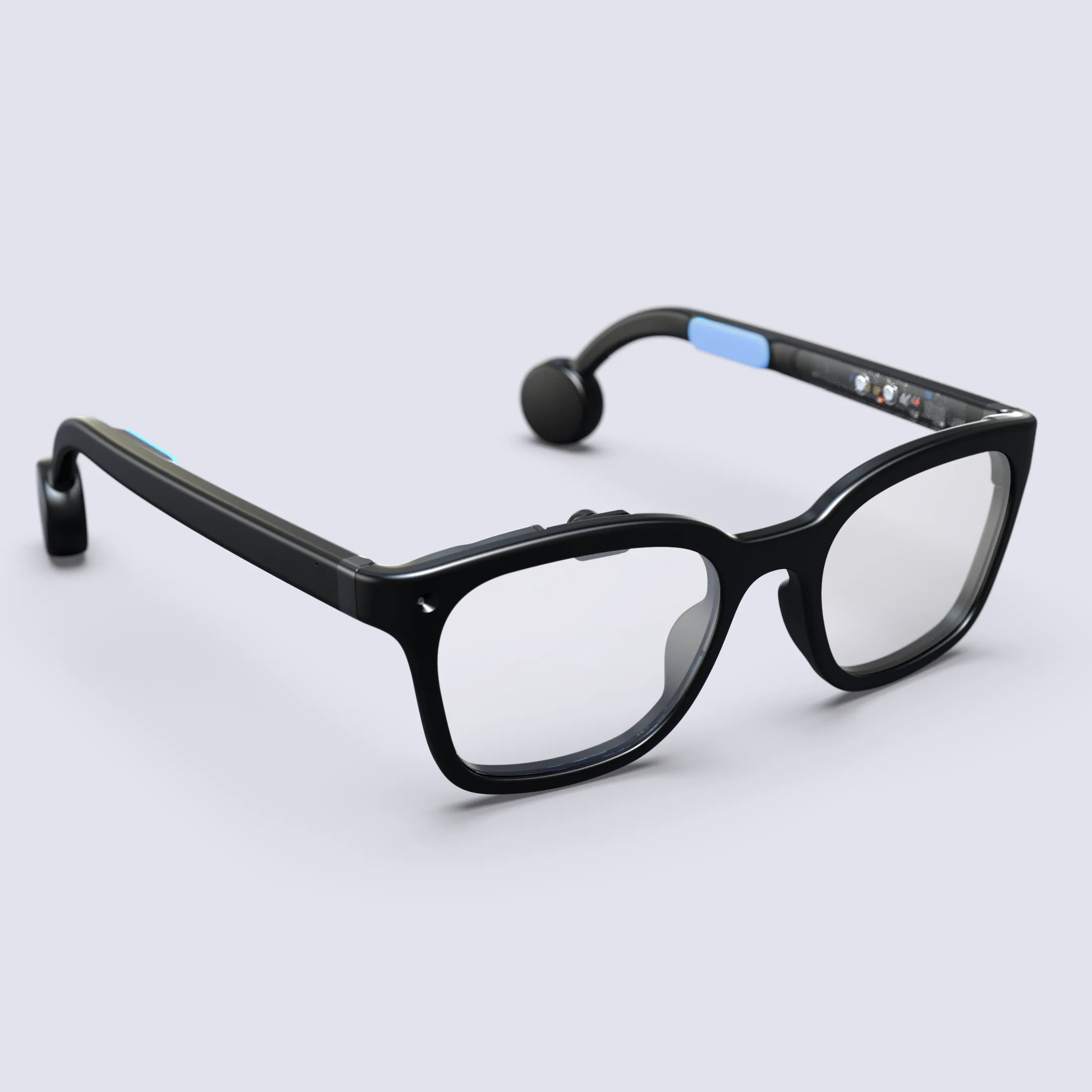
Brilliant Labs
Brilliant Halo
Synthesis score
$299
The most interesting pair for builders: open-source, on-device AI, a color microOLED display, 14-hour battery, $299. Interesting is not finished, though. It is early, niche, and rewards tinkering. A playground for developers and hobbyists; most other people should wait.
Pros
- +On-device AI: the Alif B1 chip runs a neural processor on the glasses themselves, so some AI work happens locally rather than always round-tripping to the cloud
- +Fully open-source hardware and software, so developers can build their own apps and agents instead of waiting for a manufacturer to ship features
- +A color microOLED display in the peripheral view plus bone-conduction audio, in a light frame around 40g, undercutting most display rivals at $299
- +Long battery for the category at up to 14 hours, with an adjustable diopter range (+2 to -6) so many users skip a separate prescription
- +Software ambitions are genuinely novel: Noa as a multimodal agent, Narrative for memory, and a Vibe Mode that generates small apps on the fly
Cons
- −This is a builder's device, not a polished consumer product; getting the most out of it assumes you are comfortable tinkering and reading docs
- −Brilliant Labs is a small company and the software is early, so features, stability, and the app ecosystem are still maturing
- −The peripheral color display is small and glanceable, not a large immersive screen; manage expectations against the marketing
- −Long-term support and longevity are unproven next to Meta and XREAL, which matters for a $299 wearable
- −Mainstream buyers who just want it to work out of the box will be happier with Ray-Ban Meta
This review is part of our buyer's guide, Best AI Smart Glasses in 2026, which compares every pick side by side.
Most smart glasses are sealed boxes: you get the features the manufacturer ships and nothing else. The Brilliant Halo is the opposite, an open-source pair with an on-device AI chip, sold to the people who would rather build their own features than wait. At $299 with a color display and 14-hour battery, it is the most intriguing entry in this guide and the one that demands the most from its owner.
This is a synthesis review, and an unusually caveated one: the Halo has no independent reviewer testing yet, so the specs below come from Brilliant Labs directly, not measurement. We have not tested it ourselves.
What makes it different
Two things set the Halo apart. First, the Alif B1 chip puts a neural processor on the glasses, so some AI runs locally instead of always hitting the cloud. Second, the whole platform is open-source, hardware and software, so developers can write their own apps and agents. Brilliant pairs that with genuinely ambitious software ideas: Noa as a multimodal agent, Narrative for memory, and a Vibe Mode that spins up small apps on demand. The 40g frame, color microOLED display, bone-conduction audio, and 14-hour battery round out a package that, on paper, punches above its price.
The honest catch
This is a builder’s tool, not a finished consumer product. Brilliant Labs is small, the software is early, and the experience assumes you are willing to tinker. The display is a small peripheral one, not a large screen, and long-term support is unproven next to Meta and XREAL. If you want glasses that simply work the moment you unbox them, this is not that pair, and you will be frustrated.
Where the score comes from
Our synthesis score is 7.5. It reflects credit for the genuinely novel parts, an open-source platform, on-device Alif B1 AI, a 14-hour battery, and a color display at $299. We dock it because it is a builder’s device from a small company with early software, no independent reviewer testing yet, and a small peripheral display. The score rewards a real platform advance while flagging that the specs are vendor-stated, not measured.
Who should buy it
Buy the Halo if you are a developer or hobbyist who wants an open platform with on-device AI to build on, and you see early-and-rough as a feature rather than a bug. If you want a polished everyday device, the Ray-Ban Meta Gen 2 is the safer call. The Halo is a playground, and for the right person that is exactly the point.
Frequently asked questions
What does on-device AI mean on the Brilliant Halo?
Why does open-source matter for smart glasses?
Is the Brilliant Halo a good first pair of smart glasses?
Can I wear the Halo with my prescription?
Sources
Every claim in this guide that isn't first-person experience is traceable to one of the sources below. URLs verified at publication; some may rot. Let us know if so.