Buyer's guide · smart glasses
Best AI Smart Glasses in 2026
The smart glasses worth buying in 2026: Meta Ray-Ban Display, Ray-Ban Meta Gen 2, Oakley Meta HSTN, Rokid, Even Realities G2, and more. What each is actually for.
Disclosure: We earn commissions from links on this page, as an Amazon Associate we earn from qualifying purchases, at no extra cost to you. This never affects what we recommend. Read our editorial standards →
Meta / Ray-Ban
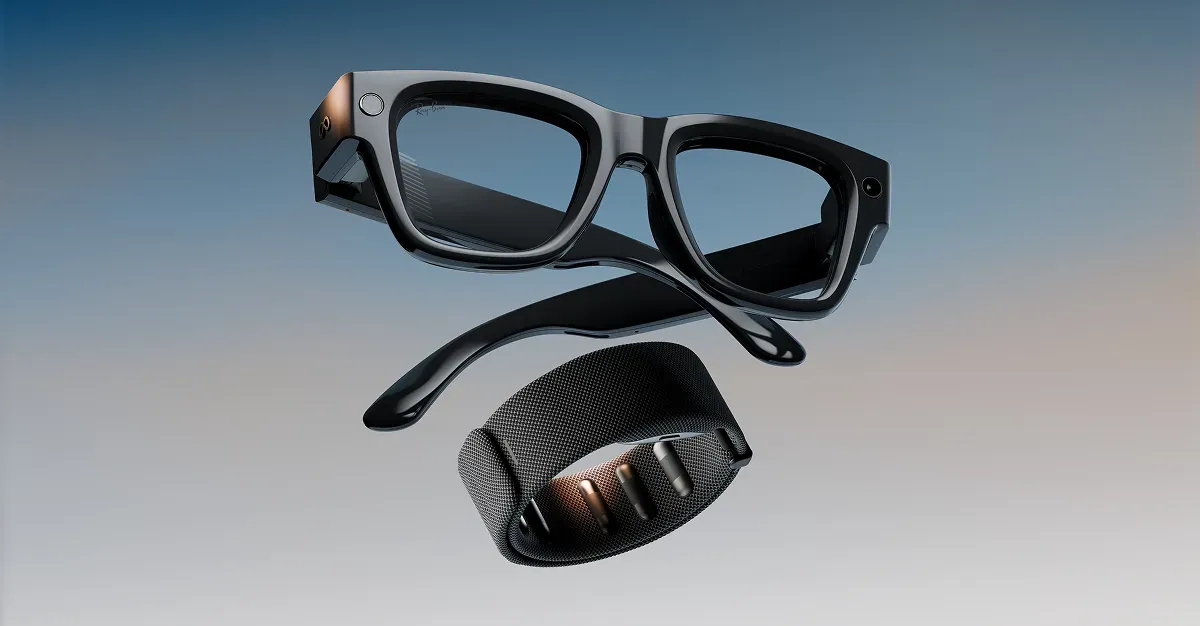
Meta Ray-Ban Display
Launched September 2025. 600×600-pixel color in-lens display in the lower-right of the right lens with a 20-degree field of view, 12MP camera, on-device Meta AI, and the Neural Band controller (a wristband that reads EMG from forearm muscles for pinch-based gestures, with an 18-hour battery). The glasses themselves run around 6 hours of mixed use at 69 grams. Per UploadVR and Tom's Guide reviews, the form factor finally passes; strangers and colleagues don't realize it's tech.
Meta / Ray-Ban
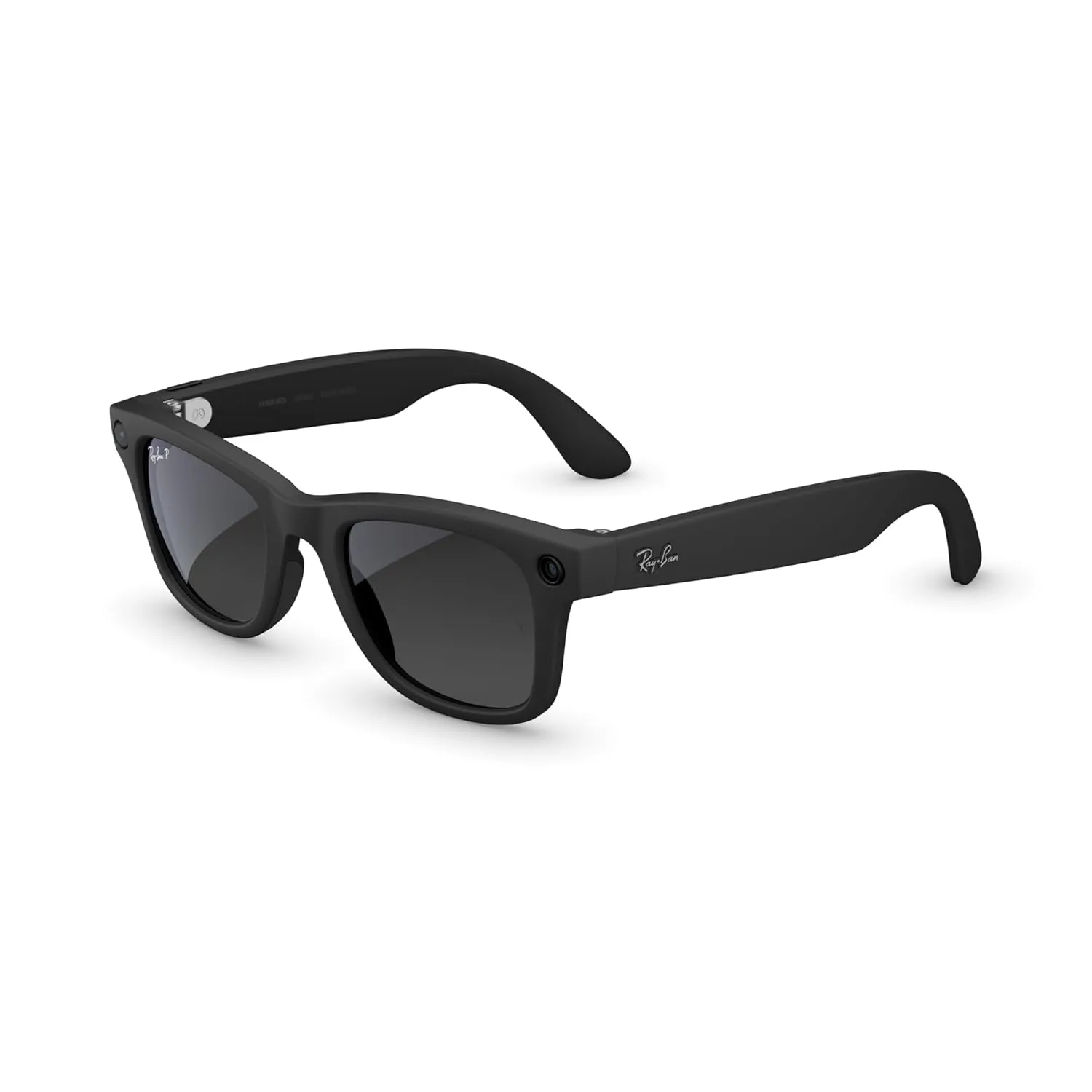
Ray-Ban Meta Gen 2
The non-Display Ray-Ban Meta: camera, open-ear speakers, on-device AI, no in-lens HUD. Less than half the price of the Display and most reviewers' pick for the best everyday AI assistance glasses in 2026 if you don't need the heads-up screen. Translation and identification work via voice and audio response.
Oakley / Meta
Oakley Meta HSTN
The same Meta AI stack as the Ray-Ban line (12MP camera, open-ear audio, hands-free assistant) in Oakley's sportier HSTN frame with PRIZM lens options that outperform standard tints in bright sun. 3K video (1440x1920 at 30fps), 8-hour battery plus ~48 from the case, 49 grams, per Tom's Guide. Caveats: no prescription lens support as of July 2026, and Android Central found real-world camera output closer to the Ray-Ban line than the 3K spec implies. As of July 2026 Amazon frequently discounts it below the $399 list.
Even Realities
Even Realities G2
The G2 replaces the G1 as the smart glasses for people who think other smart glasses look ridiculous: 36-gram magnesium-alloy frame with titanium arms that passes as designer eyewear, now IP65 rated with a sharper 640x350 micro-LED HUD at 1,200 nits that Android Police found legible in direct sunlight. Roughly two days of battery per charge. Still no camera and no speakers: everything arrives as silent text in the lens, which is exactly why it works in rooms where camera glasses don't. Sold direct as of July 2026.
Brilliant Labs
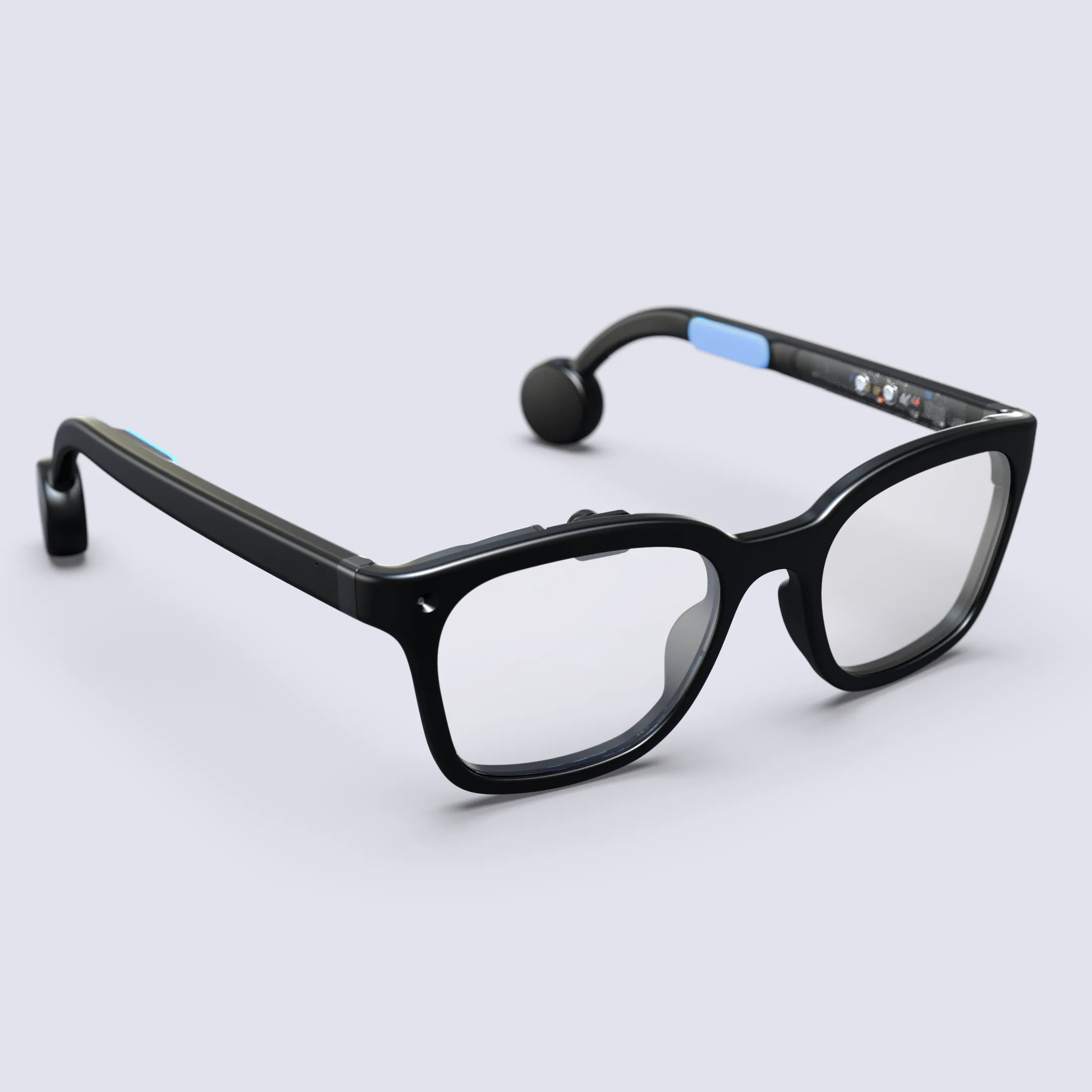
Brilliant Halo
Brilliant Labs replaced the original Frame with the Halo, which started shipping in 2026. Per Brilliant's published specs, Halo is open-source hardware and software running ZephyrOS with a Lua interface, the only credible platform on this list if you want to build on smart glasses rather than just use them. Differences from Frame: bone-conduction audio (Frame had none), an on-device Alif B1 NPU for AI inference (Frame relied on Bluetooth-tethered LLM), 14-hour vendor-claimed battery life, and an upgraded color microOLED display. AI assistant Noa now handles multimodal conversations and conversation memory per the vendor demos. Caveat: Halo is too new for independent reviewer testing as of June 2026; these specs come from Brilliant Labs directly, not RTINGS-style measurement. If a published independent review matters to you, hold for now.
Halliday
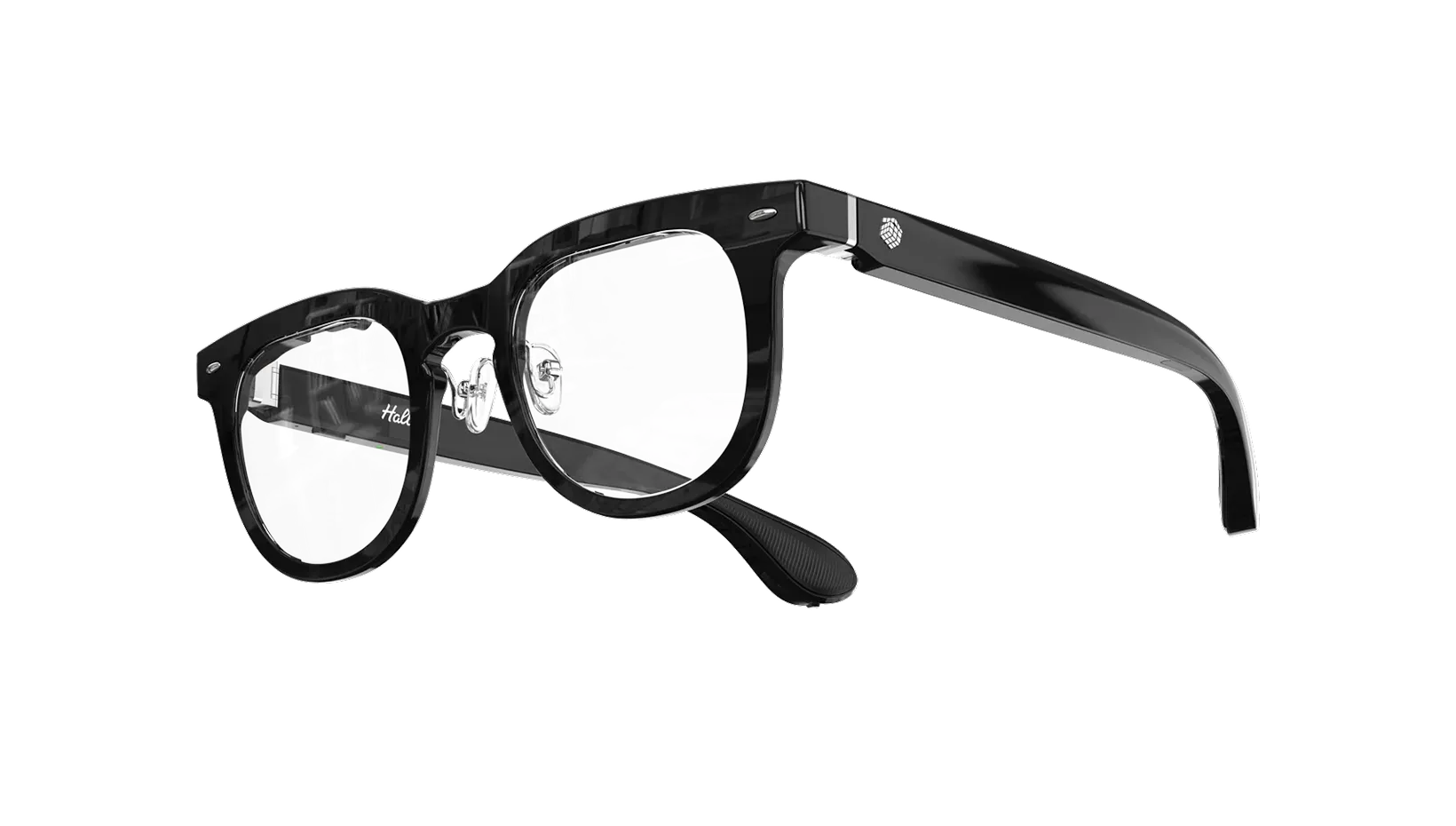
Halliday Smart Glasses
DigiWindow projector sits on the frame above the right lens and beams a virtual 3.5-inch screen into your field of view with no in-lens display element. Per Halliday's specs and Tom's Guide hands-on: 28.5 grams (lighter than the Meta Display's 69g), up to 8 hours battery, 40-language real-time translation, meeting analysis and summary features. Caveat: Android Police's review found the feature mix harder to live with daily than the price suggests. Strong on paper, more polarizing in long-term use.
Rokid
Rokid Glasses
The budget answer to the Meta Ray-Ban Display: dual monochrome green micro-LED waveguides (480x398, 1,500 nits, 23-degree FOV) in both eyes rather than one, a 12MP camera with in-lens viewfinder, and your choice of ChatGPT or Gemini as the assistant, a choice the big-name rivals don't offer. Tom's Guide made it an Editor's Choice after a 5,000-mile trip with them. Trade-offs: hit-and-miss camera, ~2 hours of battery under heavy captioning, and direct-from-Rokid ordering only as of July 2026.
XREAL
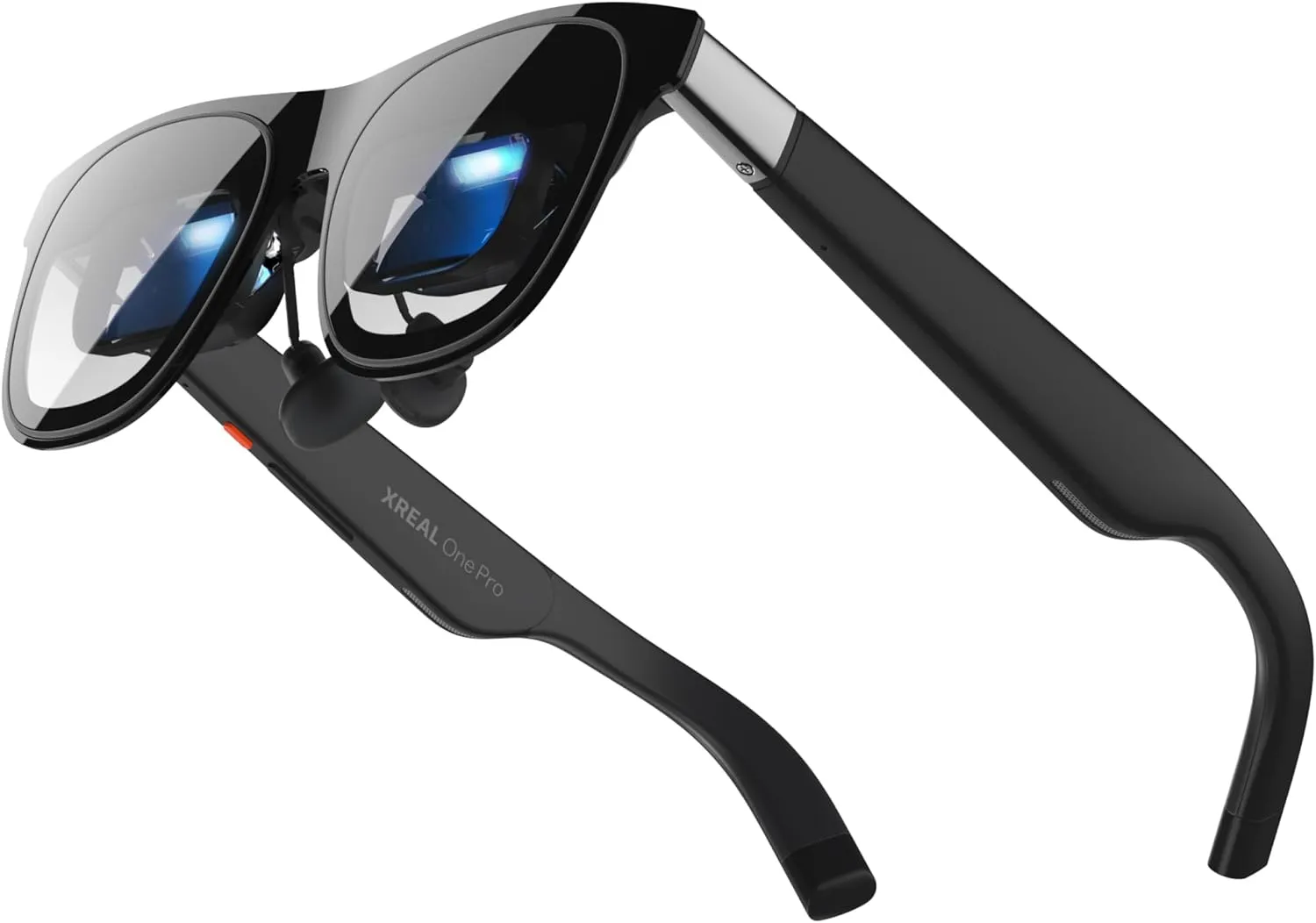
XREAL One Pro
Dual Sony 0.55-inch micro-OLED panels at 1080p per eye, 120Hz refresh, sharpest and most stable AR display in the category per Treeview. These are a wearable virtual monitor for movies, gaming, and second-screen productivity on a plane, not AI glasses. Different product category. Pick this if you want a portable cinema, not an assistant in your peripheral vision.
How we picked
This guide is a synthesis. We surveyed UploadVR, Tom’s Guide, TechCrunch, Treeview, Mobile Dev Memo, WearableBeat, Android Police, and the vendors’ own spec pages to triangulate the 2026 lineup. We have not personally tested every pair on this list. Where claims are made about weight, battery life, field of view, or display resolution, we cite the source.
We weighted five things: form factor in public (do you look like you’re wearing tech), AI usefulness (does the assistant survive daily use or stay a demo feature), battery anxiety (do you have to baby it to get through a day), display quality (where applicable), and price-to-value.
The category in 2026
Smart glasses are three product types that don’t compete directly:
AI-first audio + camera glasses (Ray-Ban Meta Gen 2, Oakley Meta HSTN). Lightweight, all-day-ish wear, voice assistant via open-ear speakers. No in-lens display.
Display + AI hybrid glasses (Meta Ray-Ban Display, Rokid Glasses, Even Realities G2, Halliday, Brilliant Halo). Add an in-lens or projected HUD plus AI. Heavier, shorter battery, more capable.
Display-only / virtual monitor glasses (XREAL One Pro, RayNeo Air 4 Pro, Viture Pro). Tethered to a phone or laptop, used as a portable second monitor. Not really AI products; different category.
Every pick in this guide has a standalone review; each product name above links to it.
Most “best smart glasses” articles conflate these three and tell you to compare Meta Ray-Ban to XREAL Air. They solve different problems. Pick by what you actually want to do.
Why Meta Ray-Ban Display wins the display + AI flagship slot
The form factor problem is solved. Meta partnered with Ray-Ban for a reason: the Wayfarer mold delivers smart glasses that pass as ordinary frames. UploadVR’s review notes that colleagues, family members, and strangers don’t comment on the technology; several noticed the glasses specifically as good-looking eyewear.
Three features earn the price. The 600×600 color microdisplay covers turn-by-turn navigation, translation overlay, and notification triage without summoning your phone. The 12MP camera with 3x zoom and on-display viewfinder is the first smart-glasses camera that actually frames a shot. And the Neural Band is the input story: pinch gestures read from forearm EMG signals rather than touch sensors that don’t work in noisy or gloved use.
What’s not great: $799 is not impulse-purchase money. The display is one eye only. Six hours of continuous use will test you on a long travel day.
Why Ray-Ban Meta Gen 2 is the no-display pick
If you don’t need the heads-up screen, the Gen 2 at $379 is most reviewers’ 2026 pick for everyday AI assistance. Same form factor as the Display, no microdisplay, open-ear audio response instead. Less than half the price. The natural everyday-wear answer for people who don’t specifically need a HUD.
Why Oakley Meta HSTN is the sport and outdoor pick
Same Meta AI brain as the Ray-Ban Gen 2, different body: Oakley’s rounder HSTN frame with PRIZM lens options that do more for outdoor contrast than any standard tint. 3K video, 8-hour battery with ~48 more from the case, 49 grams. Two catches, per our full review: no prescription lens support as of July 2026, and Android Central found the 3K camera’s real-world output closer to the Ray-Ban line than the spec suggests. Watch the price: as of July 2026 Amazon regularly discounts it below the $379 Ray-Ban Gen 2, which flips the usual value math.
Why Even Realities G2 wins for discretion
The G2 replaces the G1 with the same philosophy executed better: 36 grams of magnesium alloy and titanium that passes as designer eyewear, a sharper 640x350 micro-LED HUD at 1,200 nits that’s legible in direct sunlight, IP65, and roughly two days per charge. Still no camera and no speakers: no “identify what I’m looking at,” no audio responses, everything as silent text in the lens.
For journalists, clinicians, teachers, or anyone whose job involves wearing glasses while interacting with people who’d find smart glasses off-putting, the G2 is the strongest answer in 2026. Rough edges worth knowing from our full review: awkward arm controls, a glitchy app store as of July 2026, and an optional $249 R1 ring controller that isn’t ready yet.
Why Rokid Glasses are the display value pick
$599 buys monochrome green micro-LED displays in both eyes (the Meta Display gives you color in one), a 12MP camera with an in-lens viewfinder, and your choice of ChatGPT or Gemini as the assistant, which the big-name rivals don’t offer. Tom’s Guide gave them an Editor’s Choice after traveling 5,000 miles with them. The trade-offs in our full review: hit-and-miss camera quality, roughly 2 hours of battery under heavy live-captioning, and direct-from-Rokid ordering only as of July 2026 (the $299 non-display Style model is the one on Amazon).
Why Brilliant Halo still earns the developer pick
If you want to build on smart glasses, not just use them, Brilliant Labs is the only credible open platform in 2026. Open SDK, open hardware schematics (ZephyrOS with Lua interface), and an AI assistant (Noa) you can extend. The Halo replaces the original Frame with on-device AI inference (Alif B1 NPU), bone-conduction audio, and a 14-hour vendor-claimed battery. The look is closer to “developer kit” than fashion eyewear, and as a 2026 launch the Halo doesn’t yet have independent reviewer data, but the openness is genuine and the hardware advance over Frame is real.
When Halliday makes sense, and the asterisk
Halliday’s pitch is real: a virtual 3.5-inch screen projected via the frame-mounted DigiWindow (no in-lens element), 28.5 grams, 8-hour battery, 40-language real-time translation, $489, meaningfully cheaper than the Meta Display. The spec sheet outpaces some pricier rivals.
The asterisk: Android Police’s review found the daily-use experience worse than the spec sheet implies; display quality and AI integration didn’t justify the wear time for that reviewer. Other reviews are more positive. The signal is split. If you’re price-sensitive and the discretion of an out-of-frame projector matters, Halliday is the only product on this list at that price point with a display. Read the Android Police piece before buying.
When XREAL One Pro is the right buy
You travel a lot. You want a 1080p-per-eye virtual monitor strapped to your face on long flights. You don’t care about onboard AI. XREAL is the answer: sharpest, most stable display in the category at $599 (cut from $649 in April 2026). Different product than everything else on this list; don’t expect it to do what the AI-first glasses do.
Skip these
Snap Specs as a consumer product right now. They’re not for sale yet. Fall 2026 launch at $2,195 as of July 2026; the current 5th-gen Spectacles are developer-rental at $99/mo. Wait.
“AI sunglasses” on Amazon under $200. They’re Bluetooth speakers in plastic frames. The AI assistant is whatever your phone provides through Bluetooth; your AirPods already do this for free. Save your money.
Treating XREAL as AI glasses. They’re virtual monitors. Different category, different use case.
Who should skip this category entirely
You wear prescription glasses you love and don’t want to swap to a tech frame. Most of these products offer prescription lenses (Even Realities G2 included), but the rx markups are real and the lens options are limited compared to your optometrist’s catalog. Wait 12 to 24 months for prescription smart glasses to mature further.
You’re sensitive to weight on the bridge of your nose. Every smart glasses pair on this list is 10 to 30 grams heavier than ordinary glasses. Not a lot in absolute terms; real over a full workday.
For everyone else considering a first pair: the Ray-Ban Meta Gen 2 at $379 is the gentlest entry point. The Meta Ray-Ban Display at $799 is the right answer if you specifically want the HUD. The Even Realities G2 is the right answer if discretion is the use case.
Frequently asked questions
Are AI smart glasses actually useful or are they 2026's Google Glass?
How is Meta Ray-Ban Display different from the Ray-Ban Meta Gen 2?
Battery life: what's the realistic number?
Privacy: is the camera always on?
What about Samsung's Galaxy Glasses?
What about Snap Specs?
What about Apple's smart glasses?
Sources
Every claim in this guide that isn't first-person experience is traceable to one of the sources below. URLs verified at publication; some may rot. Let us know if so.
- Meta Ray-Ban Display Review: First Generation Heads-Up Mobile Computing — UploadVRSource for the 600×600-pixel display, 20-degree FOV, 6-hour battery, and form-factor assessment.
- Meta Ray-Ban Display review — Tom's Guide
- Meta Ray-Ban Display Smart Glasses Review 2026 — Technerdo, 2026Source for Neural Band 18-hour battery and pinch-gesture details.
- Meta Ray-Ban Display product page (Neural Band specs) — Meta
- At $799, is the Meta Ray-Ban Display 'cheap'? — Mobile Dev MemoSource on the $799 price framing and positioning vs. Apple Vision Pro.
- Halliday's $489 smart glasses beam a tiny screen to your eye — TechCrunch, January 2025
- I just went hands-on with the Halliday smart glasses with an invisible display — Tom's GuideSource for the 28.5g weight, 8-hour battery, 40-language translation, meeting summary features.
- Halliday DigiWindow Glasses (vendor product page) — Halliday
- Halliday Glasses review: Buzzword-laden curiosity I stopped wanting to wear — Android PoliceCounter-perspective from a reviewer who found the daily-use experience worse than the spec sheet implies. Cited for the Halliday caveat in the pick.
- Oakley Meta HSTN smart glasses review: What I love (and what's still missing) — Tom's GuideSource for HSTN specs: 3K video, 8-hour battery, 49g, no prescription support.
- If you hoped Oakley Meta's 3K camera quality would destroy Ray-Ban Meta's 1080p cameras, you might be disappointed — Android Central
- I traveled 5,000 miles with Rokid Glasses — this Meta Ray-Ban Display rival impressed me — Tom's GuideEditor's Choice review; source for Rokid display specs, battery behavior, and assistant choice.
- I reviewed the Even Realities Even G2 smartglasses, and they made my smartwatch feel obsolete — Android PoliceSource for G2 display specs, weight, IP65, battery, and R1 ring caveats.
- Samsung details features of its smart glasses as it enters market dominated by Meta — CNBC, July 22, 2026Source for the Samsung Galaxy Glasses FAQ entry.
- Even G1 Smart Glasses (vendor page) — Even RealitiesSource for the magnesium-alloy frame, 44-gram weight, and monochromatic green HUD.
- Best Smart Glasses & AI Glasses in 2026 — Treeview, 2026Roundup source for the Even Realities G1, XREAL One Pro launch specs (we use the current $599 retail price not the launch $649), and Ray-Ban Meta Gen 2 framing.
- Best Smart Glasses 2026: AI Camera Glasses, AR Displays, and Minimalist HUDs — WearableBeat, 2026
- Snap Says It Will Launch Consumer AR Glasses, Called Specs, In 2026 — UploadVR
- Best smart glasses in 2026 — top AR and AI glasses worth your money — Tom's GuideSource for the Snap Specs $2,195 price as of July 2026.
- Snap Specs AR glasses set for fall 2026 launch at $2,500 — PPC.Land
- Snap gets serious about Specs, spins AR glasses into standalone company — TechCrunch, January 28, 2026